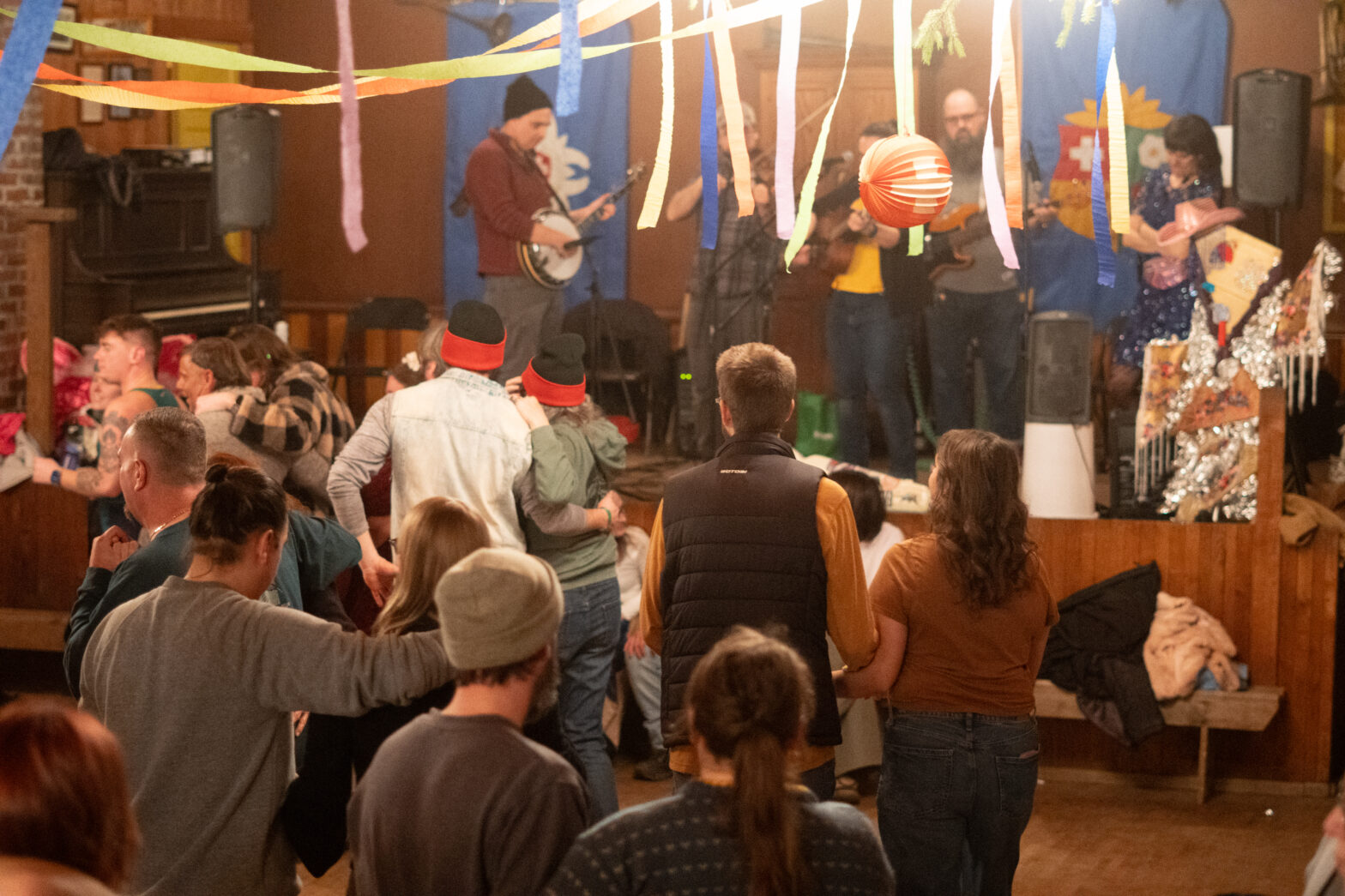
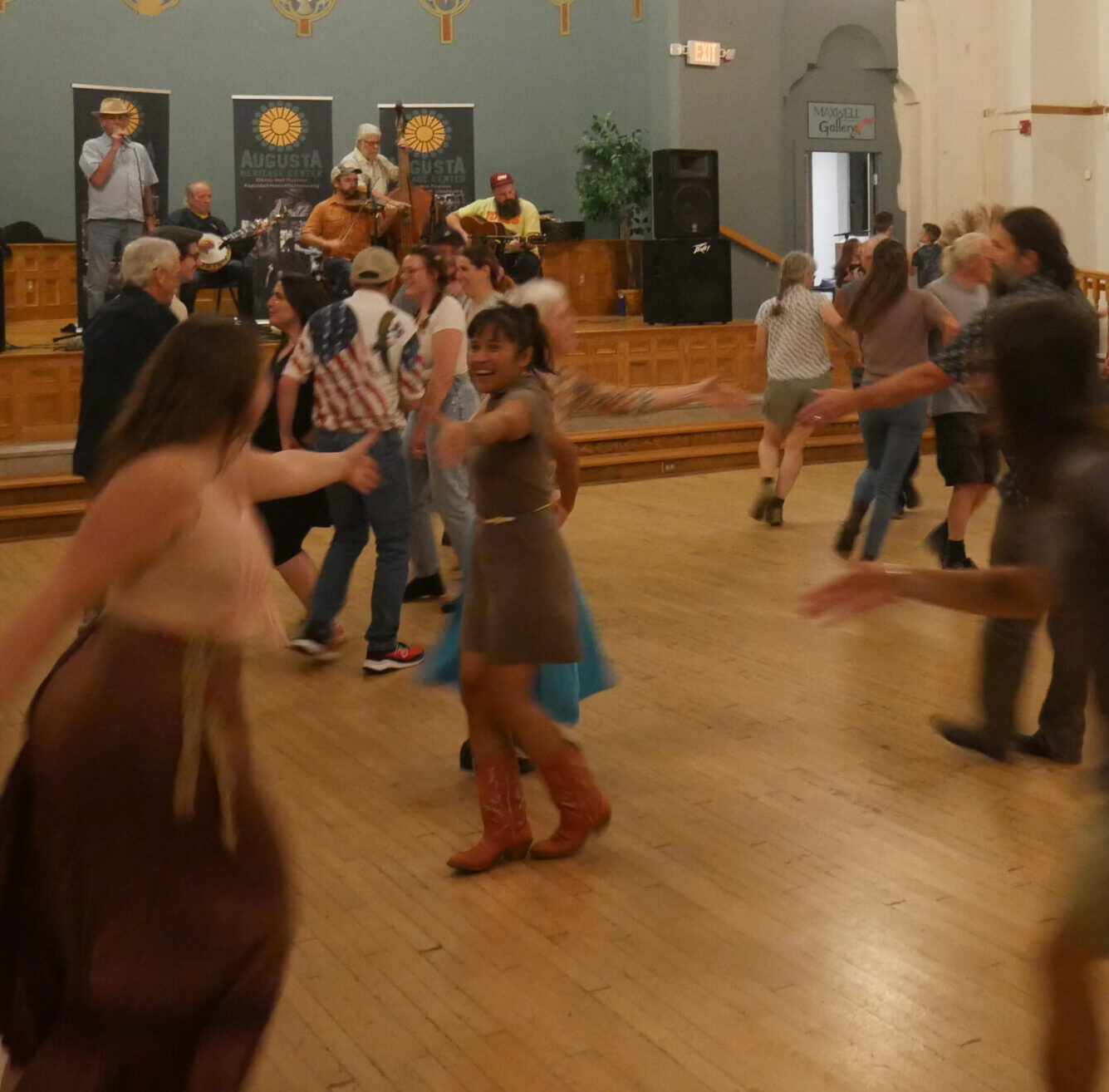
 For some, square dancing is a distant memory of a stuffy activity from elementary gym class, but here in Randolph County it’s a vibrant tradition and a wonderful opportunity for affordable and family-friendly fun!
What is square dancing?
Square dancing is a uniquely American tradition of social dance that developed over generations out of a mix of European, African-American, and Indigenous American dance traditions. For generations it was an important form of entertainment at-home or at communal work days in rural communities. It’s popular throughout West Virginia and Appalachia, and can be found all over the country. Square dancing consists of pairs of dancers in a group following a series of instructions from a caller, usually along to live music. Like other folk traditions it varies from community to community, but there are many commonly shared moves like “swing your partner”, promenade, and “do-si-do”. The “square” in square dancing refers to the four-couple square, or sets of 8 dancers. Square dance events typically include “circle dances” as well, where couples form a ring and join into 2-couple sets. You might even see a waltz or a contra.
Where can you find a dance?
Square dancing can be found almost year-round in Randolph County, but mostly on select weekends at annual or monthly events so it’s best to plan ahead to see what’s coming up! Here are some of our usual opportunities:
Elkins Barn Dance Collective: In 2023 a group of volunteers came together to bring monthly square dances back to Elkins. The Elkins Barn Dance Collective hosts a dance every month (usually a Friday), and keeps things fresh with a different caller and band each month. Their dances are held at a variety of venues like The Arts Center, Big Timber Brewing, and the outdoor pavilion on Davis & Elkins College campus. In addition to square dances, the Collective hosts occasional contra dances, Irish, and even Cajun dances. Follow them on Instagram or Facebook to learn about upcoming dances.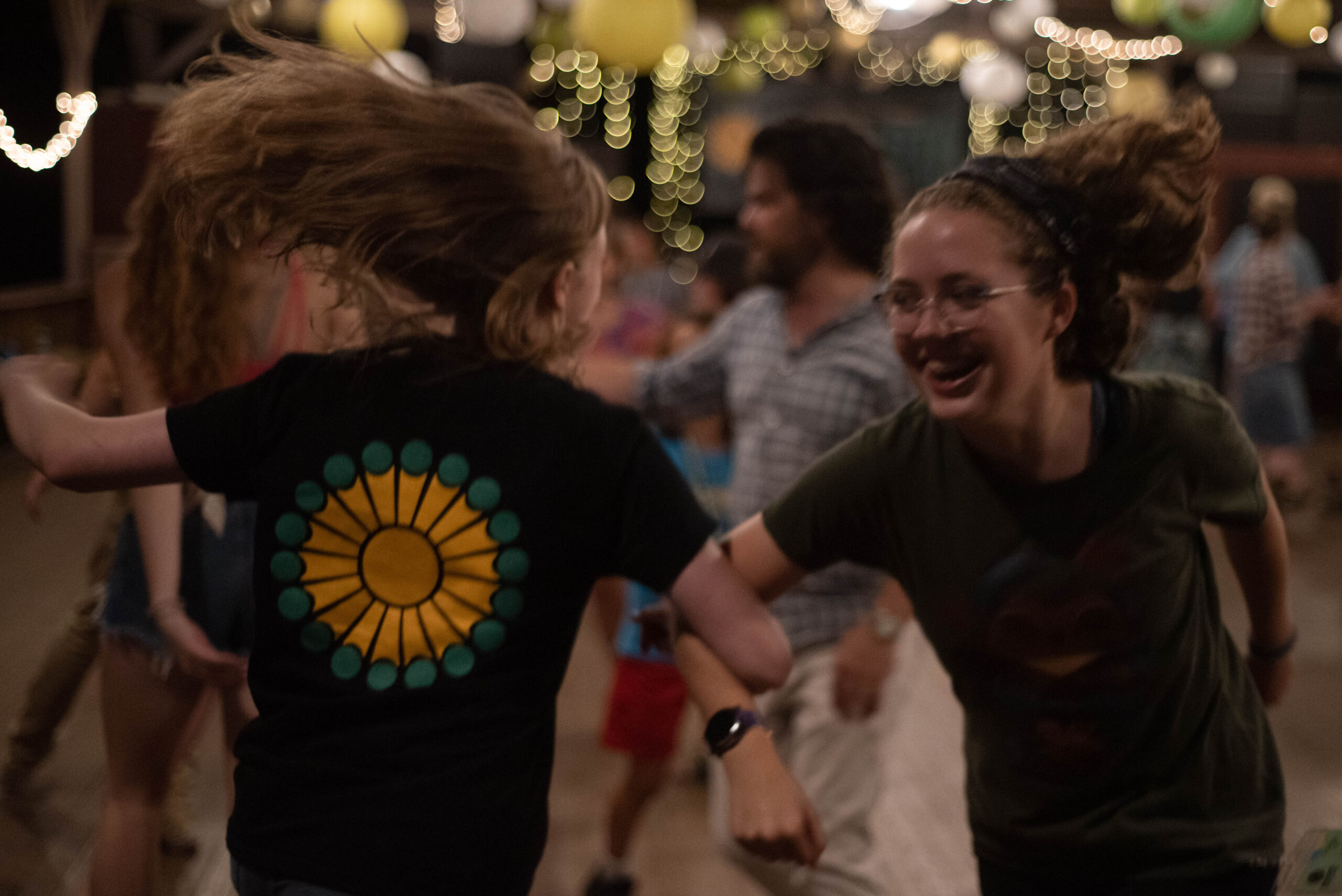
Augusta Heritage Center: For over 50 years, the Augusta Heritage Center has been known as the hub of traditional music, dance, and craft in West Virginia. Their annual summer sessions of hands-on classes bring performers and students to Elkins from around the world, and feature social dances multiple nights a week every July. You can usually find square dances during their Old-Time and Bluegrass weeks. Their new building in downtown Elkins will soon be home to a sprung hardwood floor – perfect for dancing!
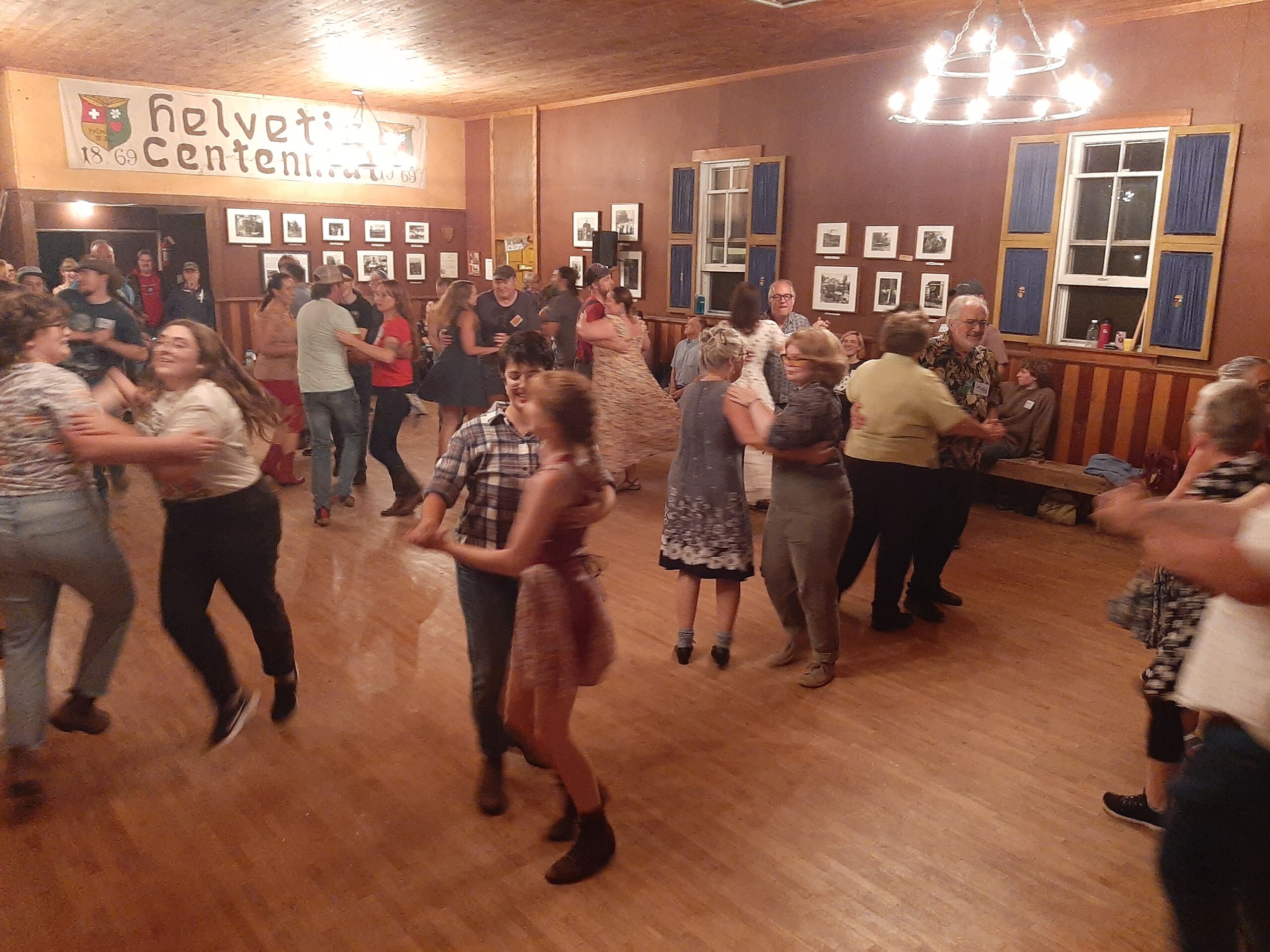 Helvetia Hoot: Have you ever wished you could attend a square dancing summer camp? You can at the Helvetia Hoot, an annual weekend event celebrating all things square dancing. Held in the small community of Helvetia, you can take workshops in square dance calling (and dancing) as well as foodways, music, crafts, and other traditional arts. The highlight of the event is its nightly square dances featuring some of the hottest bands and most beloved dance callers from West Virginia. This year’s event will be held May 29-30.
Helvetia: There are a host of other annual events in this Swiss-Appalachian community that feature square dances as part of the festivities, like Fasnacht and the Helvetia Community Fair. The square dancing in Helvetia is a one-of-a-kind tradition. While most modern square dances feature a caller that gives instructions while on stage, in Helvetia the calls are given by one of the dancers on the floor (sometimes without a microphone). Contrary to the name, the dances in Helvetia are circle dances rather than 2-or-4 couple squares. The main dance figure used is unique to Helvetia as well. In addition to the circle dances, you may see polkas or the “Helvetia Polka” which is actually a schottische.
What if I’ve never danced before?
Don’t worry: no experience is necessary! As many callers say, you only need to know your right from your left! It may seem confusing at first with unfamiliar terms like “corner” or “allemande”, but most dance callers will explain what to do and walk you through each step. And don’t worry about finding a dance partner. Most dancers will pick a new partner after every dance, so don’t worry about coming alone. Most veteran dancers are glad to help show you the ropes. Traditionally, the roles are referred to as the “gent” and the “lady” but anyone can dance either part. No special attire is required, though soft-soled shoes are preferred for venues with wooden floors. If you don’t feel like dancing, you can even attend a dance to watch and enjoy the music.
Why should you square dance?
Not only is square dancing a beloved and authentic part of our cultural heritage, it’s great for your physical, mental, and social health! It’s a great form of exercise, and can help with hand-eye coordination. As they say in a traditional call from Helvetia: “sixteen hands and roll that wheel, the more you dance the better you’ll feel!” It’s a great way to meet new people, make friends, and join a community of fellow dancers young and old. But most importantly, it’s an easy source of fun for all ages!